Dark matter is an attempt to explain unpredicted gravitational influences in the universe.
STEMInA’s Research Experience Program paired me with Dr. Tony Noble.
Enabling various trips!
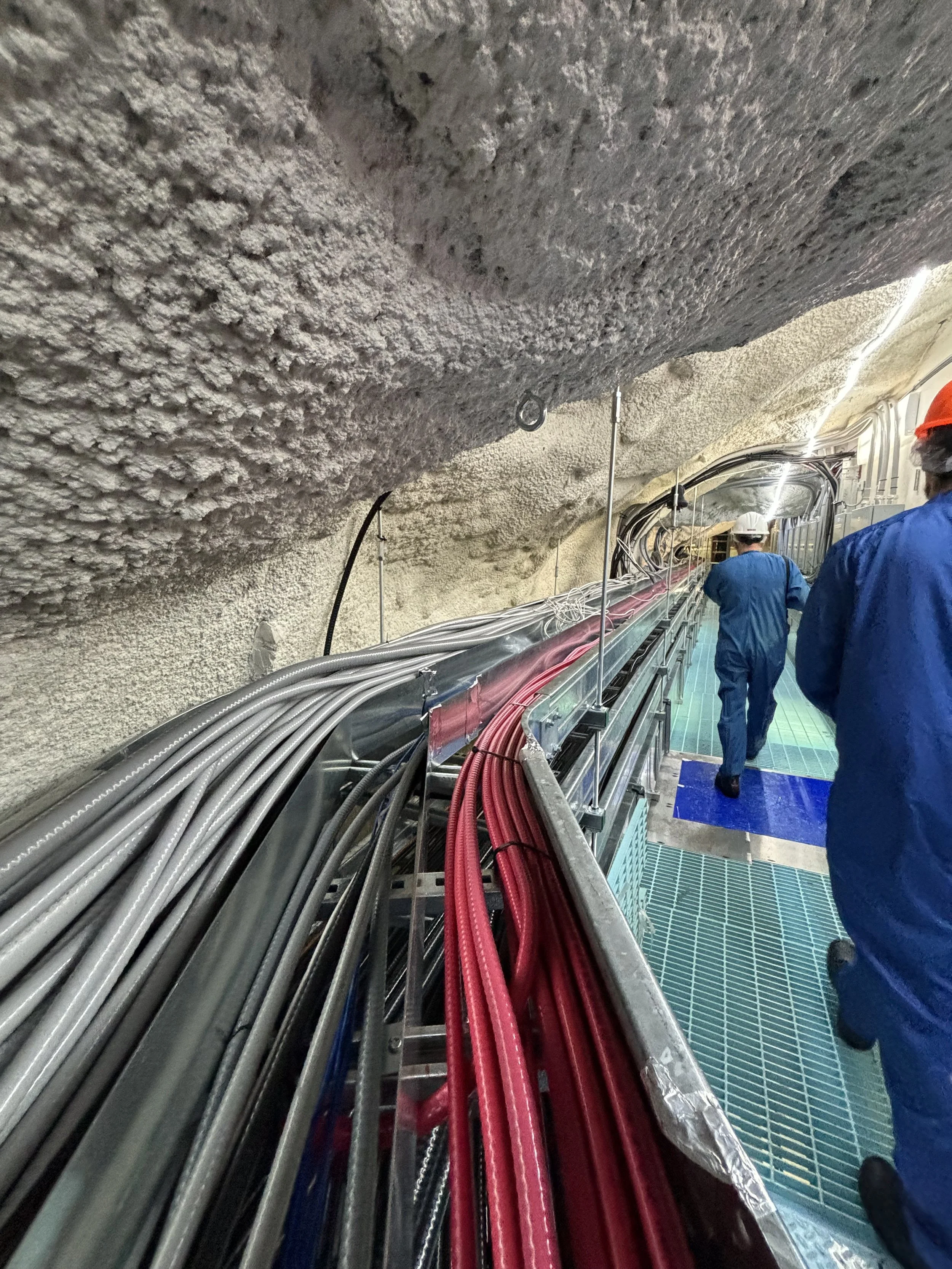
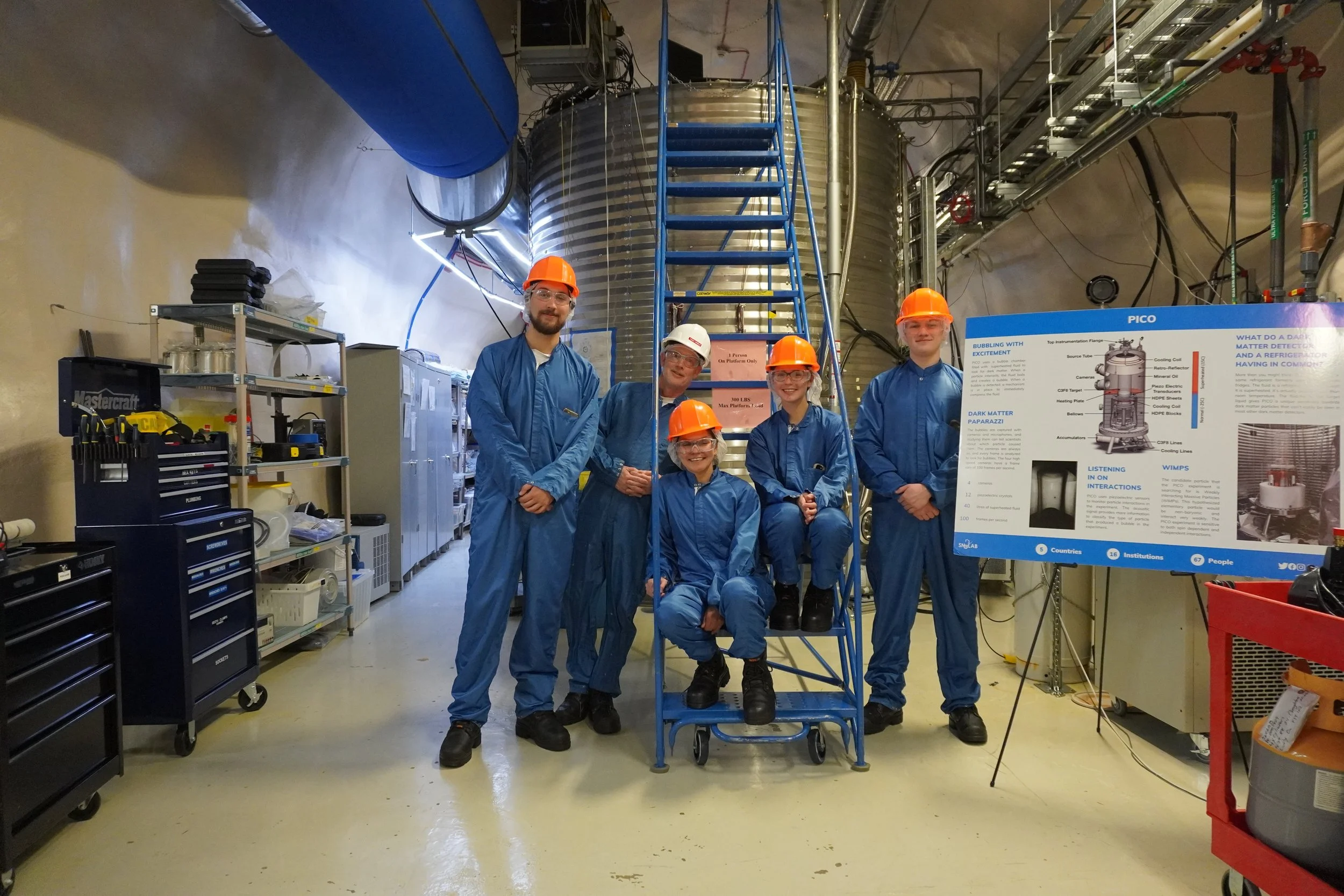
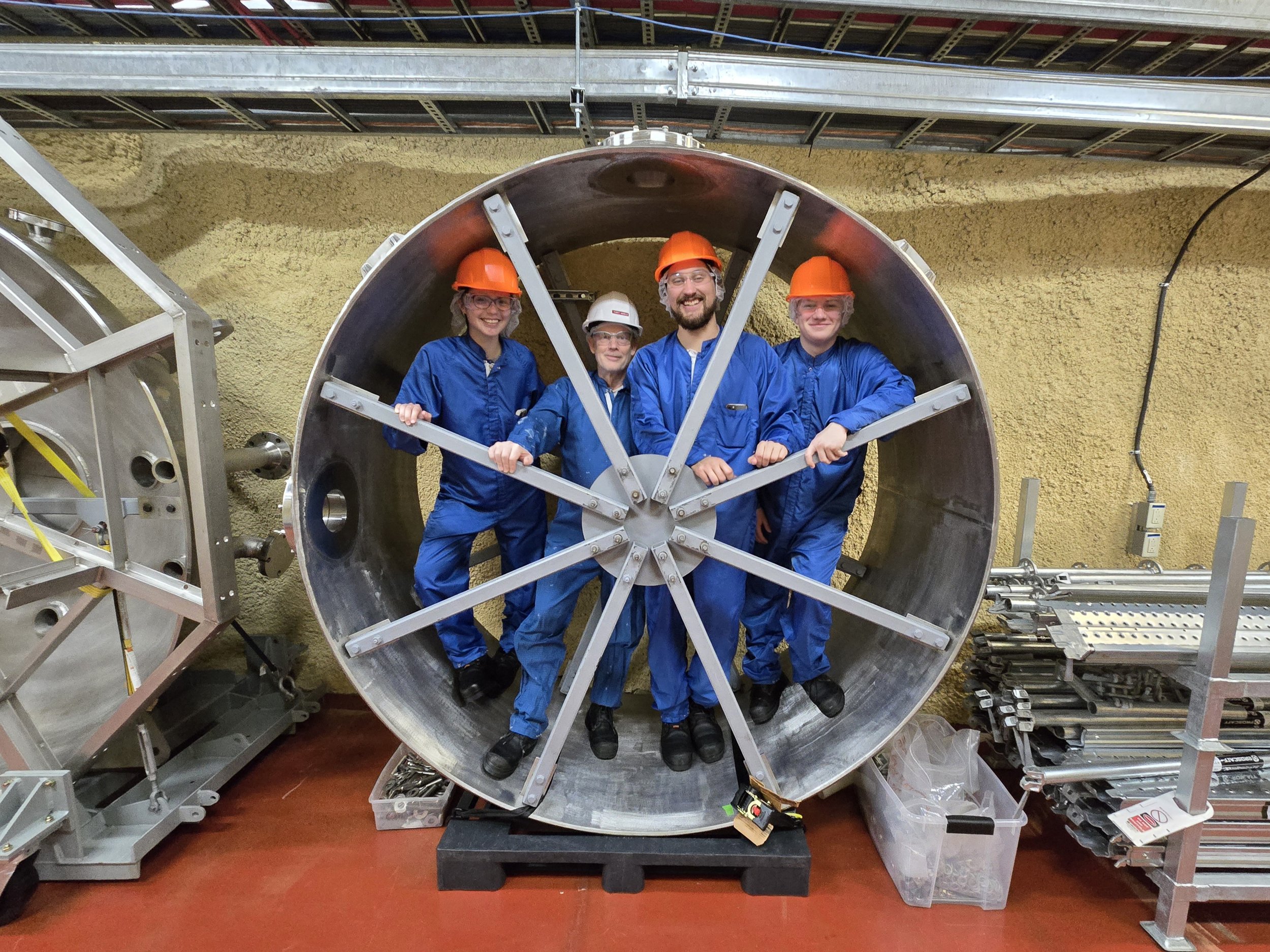
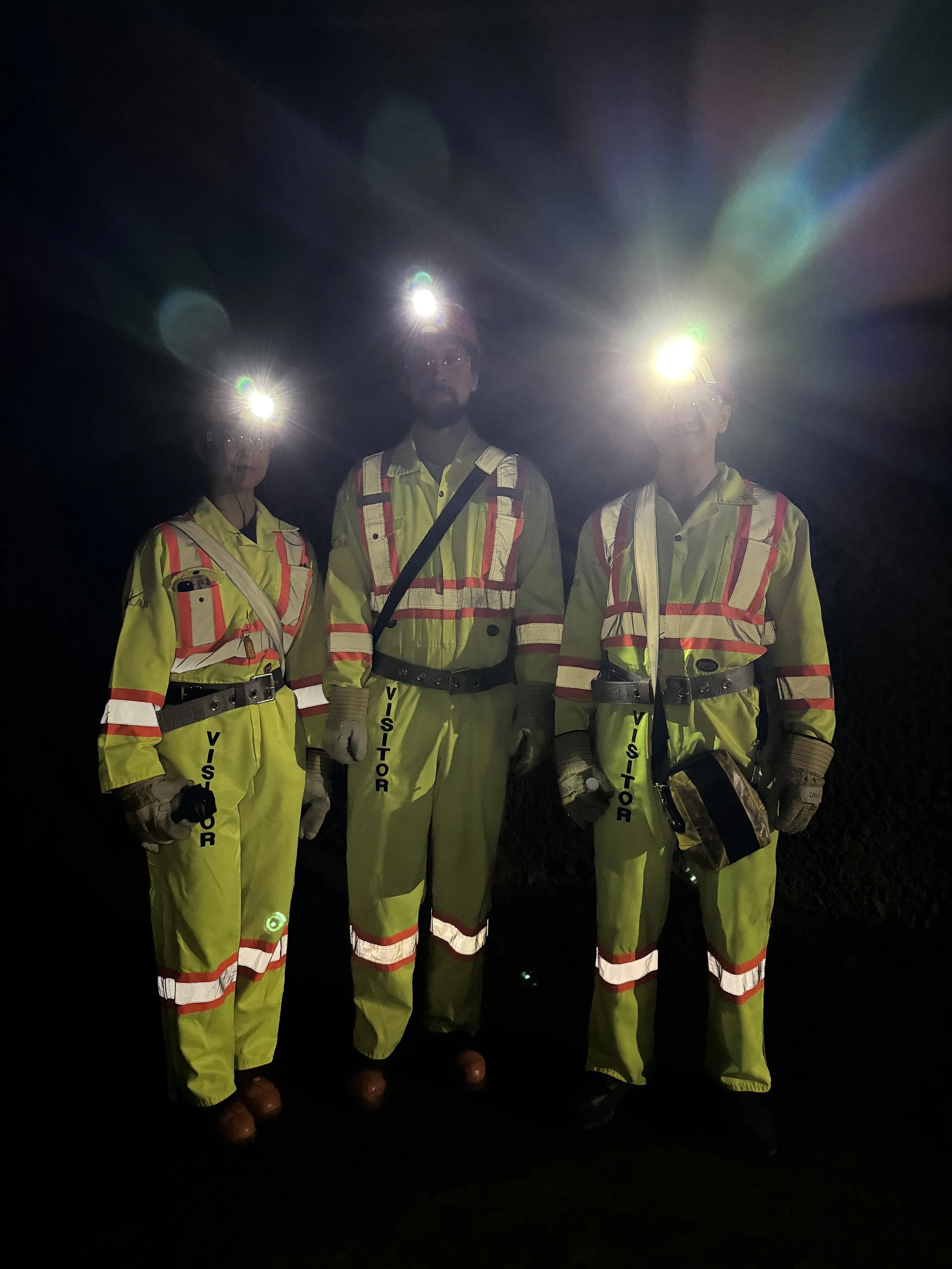
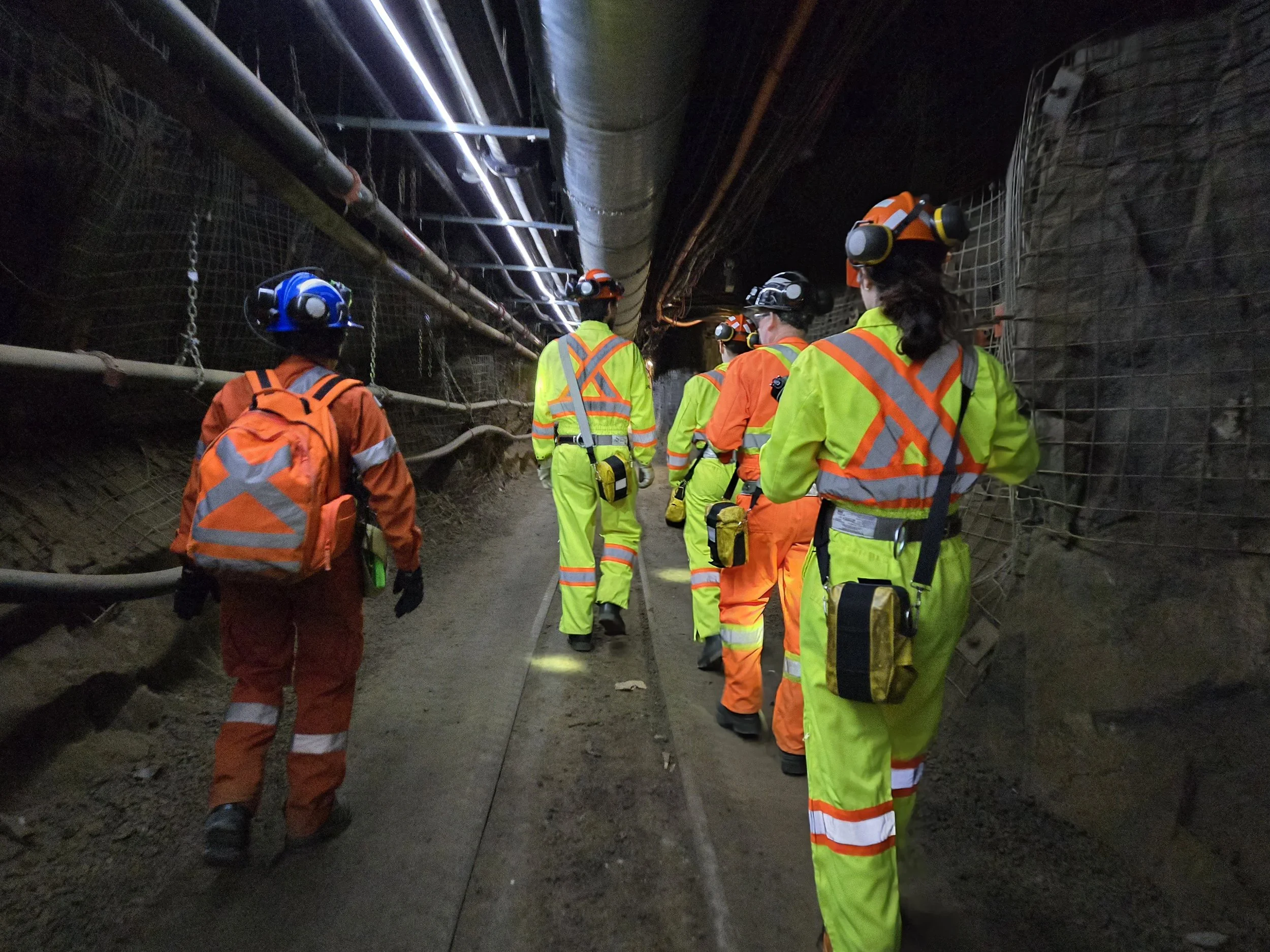
from presenting this research in San Antonio TX at the AISES National Conference ‘24! and exploring SNOLAB’s underground facility in Sudbury ON!
abstract
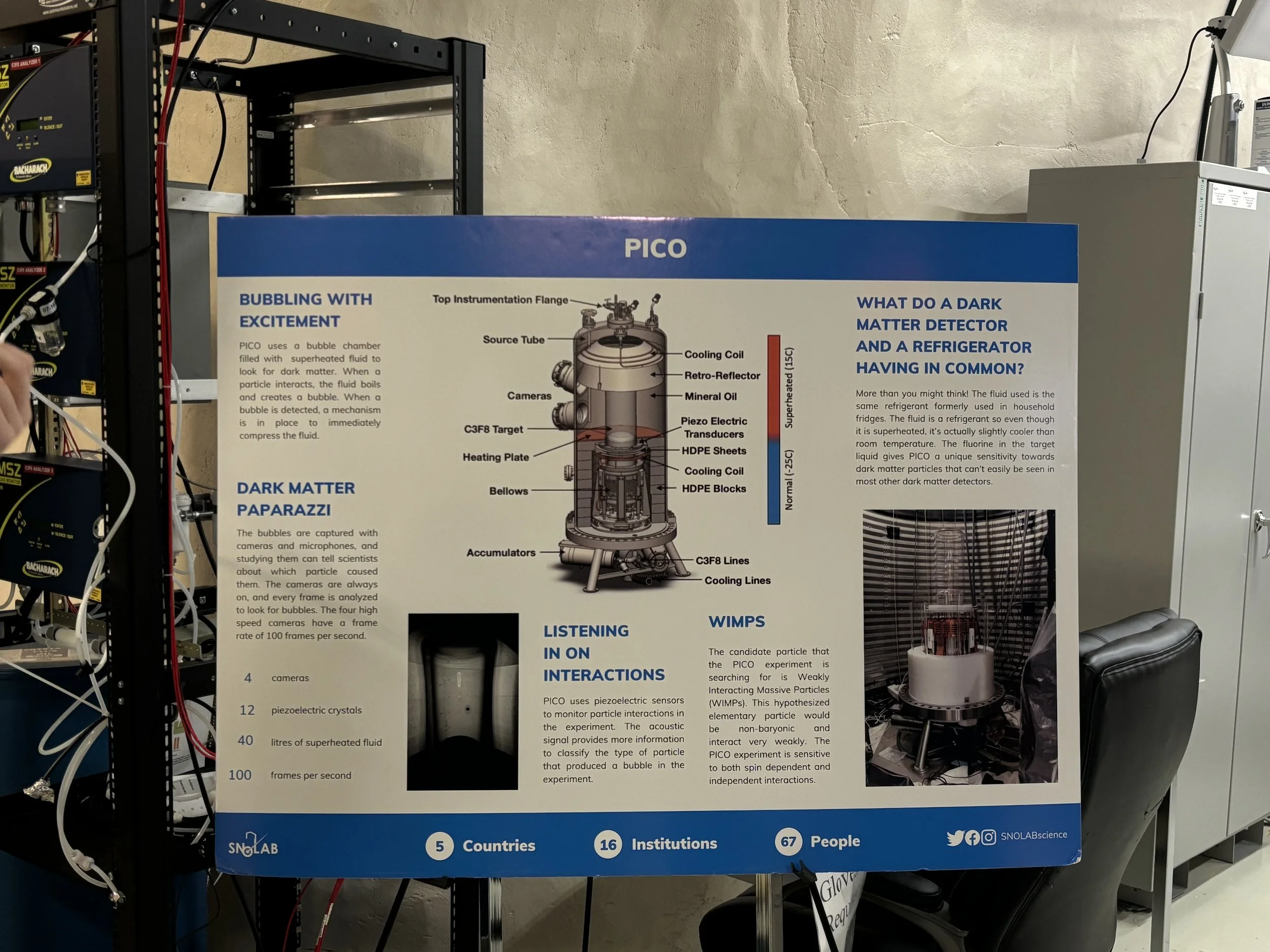
The PICO-40L, a bubble chamber particle detector filled with superheated fluid, is being used to record particle interactions. This detector is searching for weakly interacting massive particles (WIMPs), a dark matter candidate. WIMPs are long-lived and likely pass straight through Earth without interaction, whereas other particles interact or get absorbed before reaching the detector deep underground.
Exploring bubble multiplicity is crucial because neutrons and WIMPs are predicted to behave identically in PICO-40L. The difference is that neutrons have significantly more energy and can interact multiple times. A bubble forms when an interaction occurs, and the detector records the associated data.
Using Python, the collected data from neutron calibration runs was analyzed to determine the ratio of single to multiple bubble events. This analysis is necessary to understand neutron behaviour and to provide statistical support for any claimed dark matter events.
Dark matter is an attempt to explain unpredicted gravitational influences in the universe.